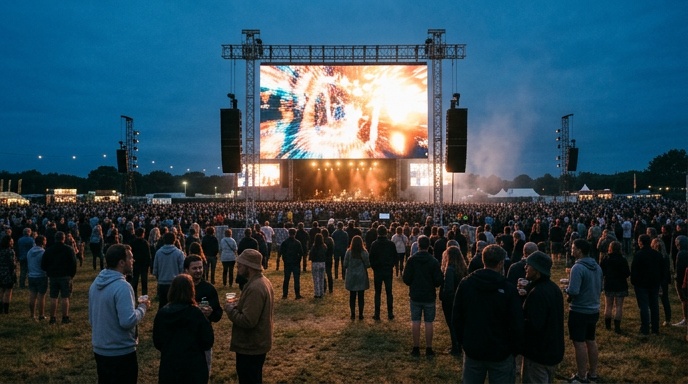
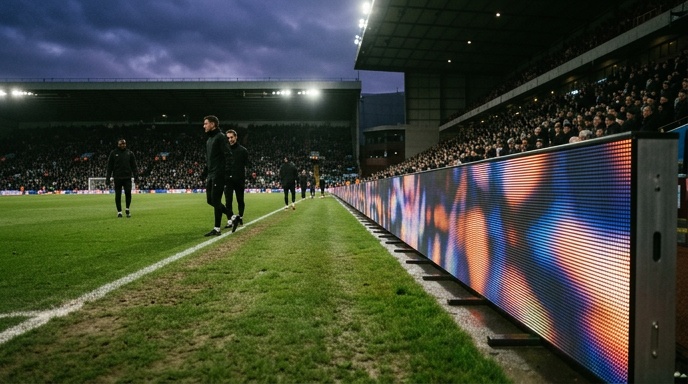
Pitchside LED perimeter boards are the digital advertising panels that run along the sideline of a pitch, showing sponsor messages that change throughout a match. They replace static painted hoardings with bright, animated screens that broadcast clearly on television and to the crowd in the stands.
For Irish sports grounds, they open up a real revenue stream. One board can rotate through several sponsors during a single game, and the content is remote-controlled so it changes instantly between advertisers. Systems here can run continuously up to 300m of perimeter, which is enough for a full GAA pitch or a large multi-sport ground.
Below we cover how these boards work, what they cost to run, what to plan for at your ground, and whether hiring or buying makes more sense for your club.
How Do Pitchside LED Perimeter Boards Work?
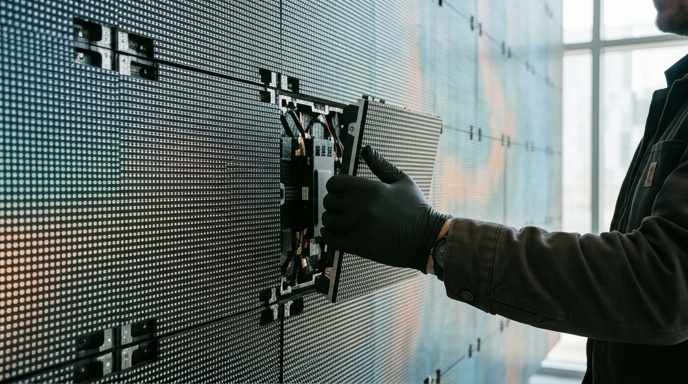
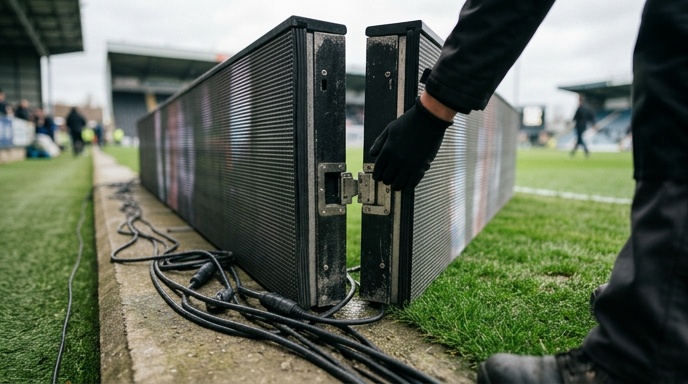
Pitchside LED perimeter boards are modular LED panels linked together along the sideline and driven by a central processor that controls what appears on screen. Each panel is built for outdoor use, high brightness, and a fast refresh rate so the image looks steady on camera rather than flickering during a televised broadcast.
The panels sit in a low, angled frame at the edge of the pitch. That angle points the display up towards the stands and the main camera position while keeping the top edge padded and safe for players near the line.
- Modular panels click together in a run, so the length matches your pitch rather than a fixed size.
- A central processor, usually Novastar control, feeds content to every panel at once.
- High refresh rate keeps the image clean on television cameras.
- Content is scheduled and changed remotely, no one needs to be pitchside during the match.
Because the whole run is one system, a match-day operator can drop in a new sponsor loop, a score graphic, or a safety message in seconds. That flexibility is the main reason grounds move away from painted boards.
Why Do Irish Sports Grounds Choose LED Perimeter Boards?
Irish grounds choose LED perimeter boards because they turn the sideline into a paying asset while looking sharp on broadcast. A single run of boards can host multiple sponsors across one fixture, so the ground earns from advertising it could never fit with static signage.
The televised effect matters too. When a match is on TV or streamed, moving sponsor content reads far better than a faded painted hoarding, and advertisers pay more for that exposure.
- Multiple sponsors rotate through the same physical space during one game.
- Content updates instantly, so late sponsor changes are no problem.
- Bright panels stay readable in daylight and under floodlights.
- The boards double as a channel for score updates, crowd safety notices, or club announcements.
Boosting Sponsorship Revenue at Your Club
The revenue case is the deciding factor for most clubs, because a board can pay for itself through advertising deals. Instead of selling one fixed hoarding for a season, you sell rotating slots to several local businesses, each getting animated screen time on match days.
Some clubs run a self-funding model where advertising income covers the cost of the boards over time. It’s worth working out realistic sponsor numbers for your area before committing, as a smaller ground with steady local support can still make the figures stack up.
What Should You Plan for Before Installing Perimeter Boards?
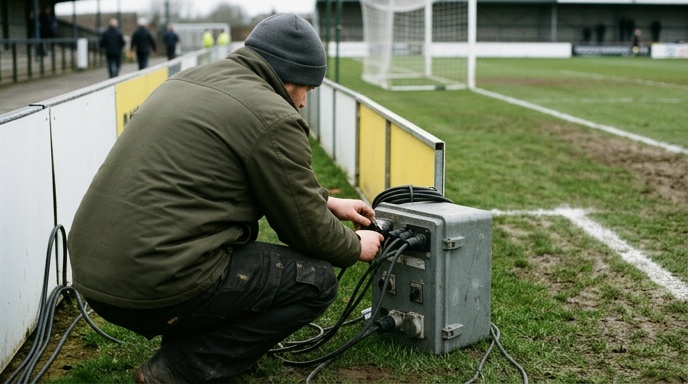
Before installing perimeter boards, plan around power supply, cable routing, safety at the pitch edge, and how content will be managed on match days. These four practicalities decide whether the system runs smoothly or causes headaches every game.
Power is usually the first hurdle. A long run of LED draws real current, so the ground needs adequate supply and safe distribution to each section of the boards.
| Planning Factor | What to Sort Out |
|---|---|
| Power supply | Enough capacity for the full run, with safe outdoor distribution |
| Cable routing | Protected, trip-free runs from the control point to the boards |
| Player safety | Padded top edge, correct set-back distance from the playing line |
| Content control | A clear match-day plan for who schedules and runs the sponsor loop |
| Weather rating | Panels rated for continuous outdoor use in Irish conditions |
Player safety governs the physical setup. The boards need the right set-back from the line and a padded top so a player sliding near the sideline isn’t hurt. A qualified installer will confirm the safe distances for your sport before anything goes in.
Indoor Arena Versus Outdoor Ground Setups
Outdoor grounds need weatherproof panels and higher brightness, while indoor arenas can use finer pixel pitch because viewers sit closer. An outdoor GAA pitch faces rain, wind and direct sun, so the panels must be rated for continuous outdoor use and bright enough to cut through daylight.
Indoor courts and arenas are a different job. Spectators are nearer the boards, so a tighter pixel pitch gives a crisper image, and brightness can be lower without washing out under artificial light. The Sport Ireland facilities guidance is a useful reference when planning any permanent ground upgrade.
Should Your Club Hire or Buy Perimeter Boards?
Hire perimeter boards for one-off fixtures, tournaments or a trial run, and buy them when your ground hosts regular televised or high-profile matches. The right call comes down to how often you’ll actually use the boards and whether sponsor income can cover an outright purchase.
Hiring suits a club testing the waters. You get event-ready boards delivered, installed and taken down, with technical support on the day, and no long-term commitment.
- Hire for cup finals, testimonials, one-off events, or to trial the sponsor model before buying.
- Buy when boards will be in use across a full season of regular fixtures.
- A rental trial often converts to a permanent install once the revenue proves out.
- Leasing or rent-to-buy can bridge the gap for clubs building sponsor income.
If you’re weighing up a permanent setup, LED video wall and screen installation covers the fixed-install side, while short-term needs are handled through event LED screen hire. Many clubs start with a hire for a big fixture, see the sponsor response, then move to buying.
What About Ongoing Reliability and Repairs?
Ongoing reliability comes down to weather-rated hardware and fast fault resolution, because a dead panel on match day means lost sponsor value. Outdoor LED takes a beating from Irish weather, so panels rated for continuous outdoor use and a quick repair path both matter.
Repair turnaround is the part clubs often overlook. If a panel fails, waiting weeks for a manufacturer return means broken content across a run of fixtures.
- Choose panels rated for 24/7 outdoor operation, not indoor-only kit pressed into outdoor use.
- Ask who repairs the boards and how quickly, before you commit.
- Check whether remote monitoring is offered, so faults are spotted early.
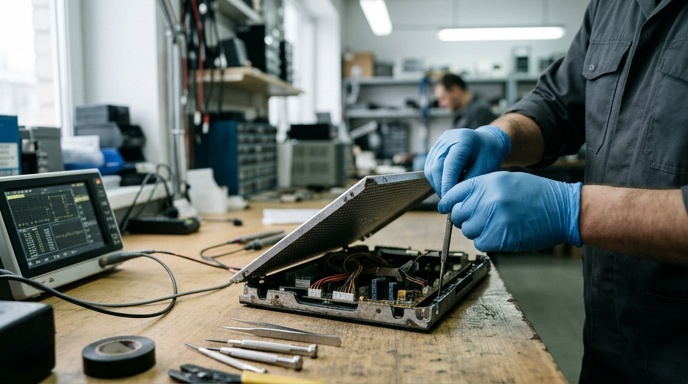
An in-house repair team makes a real difference here. Our own workshop diagnoses and fixes boards directly rather than sending them back to a manufacturer, which keeps downtime short and your sponsor content live through the season.
How Much Do Pitchside LED Perimeter Boards Cost?
Pitchside LED perimeter board costs depend on the length of the run, the pixel pitch, indoor versus outdoor rating, and whether you hire or buy, so there’s no single fixed price. A short indoor run for an arena is a very different figure to a full 300m outdoor GAA perimeter.
Rather than quote a number that won’t fit your ground, the honest answer is to get a site visit. An installer measures the perimeter, checks power and access, and prices the exact system your ground needs.
- Run length in metres is the biggest single cost driver.
- Finer pixel pitch and higher brightness push the price up.
- Hire spreads cost per event, while buying suits regular use.
- Self-funding through advertising can offset a purchase over time.
For a figure that actually matches your ground and fixture calendar, the practical step is a free site visit and quote. That’s where the real numbers come from, not a rough guess online.