Good restaurant lighting ideas come down to layering three things well. You want ambient light for the room, task light for tables and prep areas, and accent light to pick out features like a bar back, artwork or a stone wall. Get those three layers balanced and dimmable, and the same room works for a bright weekday lunch and a low, warm Saturday dinner.
Lighting shapes how long people stay, how the food looks, and whether a space feels inviting from the street. Colour temperature matters too. Warm white around 2700K flatters food and skin tones, while cooler light suits kitchens and counters.
Here are 10 ideas Irish venues can use, from pendants over tables to facade lighting that pulls footfall off the path.
What Makes Restaurant Lighting Work?
Restaurant lighting works when it is layered, dimmable and tuned to warm colour temperatures. The combination of ambient, task and accent light lets one room shift mood through the day, while dimming controls carry a venue from bright lunch service into a relaxed evening without changing a single fitting.
Three layers do the heavy lifting in any dining room.
- Ambient light sets the base level for the whole room, usually recessed downlights or soft ceiling fittings.
- Task light covers tables, the bar and the pass, so staff and diners can see what they are doing.
- Accent light draws the eye to features, a feature wall, bottle displays, or a piece of art.
Colour temperature is the other half of the job. Warm white near 2700K makes food and people look their best, so it suits the dining floor. Keep cooler, brighter light for the kitchen and back areas where staff need clarity.
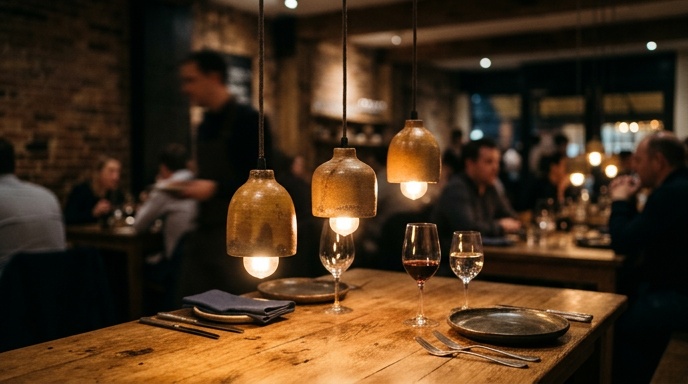
1. Layer Warm Pendant Lights Over Dining Tables
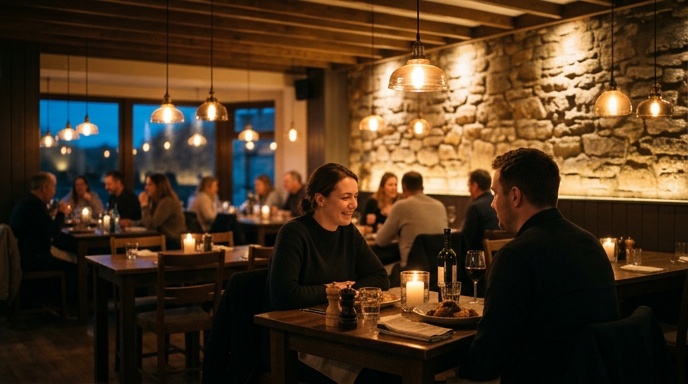
Pendant lights hung low over tables give each setting its own pool of warm light and a sense of intimacy. Position them roughly 70cm to 90cm above the table surface so they light the plates without glaring into diners’ eyes. Choose warm white around 2700K for a soft, flattering glow on food and faces.
Pendants also break up a high or flat ceiling and add character to a plain room. In a long Irish townhouse dining space, a row of matched pendants down the centre reads as deliberate design rather than filler lighting.
2. Install Dimmers on Every Circuit
Dimmers are the single most useful upgrade for a restaurant, letting one room serve bright lunch trade and low-lit dinner from the same fittings. Split the room into zones, window seats, central tables, bar and entrance, so you can lift or drop each area independently as the night changes.
Dimming also protects your margin. Running lights at 70% draws less power and extends lamp life, which matters across a full week of service.
- Zone the floor so front and back light separately.
- Set a bright preset for cleaning and a low preset for late service.
- Use quality LED lightening setup rated for dimming to avoid flicker.
Flicker and buzz are the usual complaints with cheap dimming kit, so matched drivers and controls are worth the outlay. A qualified installer will spec compatible components rather than mix and match.
3. Use Accent Lighting to Highlight Features
Accent lighting picks out the features that give a venue its identity, a stone wall, a mirrored bar back, artwork or a wine display. Aim narrow spots or small LED screen fittings at those points so they sit brighter than the surrounding room and naturally draw the eye.
The trick is contrast. If everything is lit to the same level, nothing stands out. Keep the general room lower and let the accented features carry the drama.
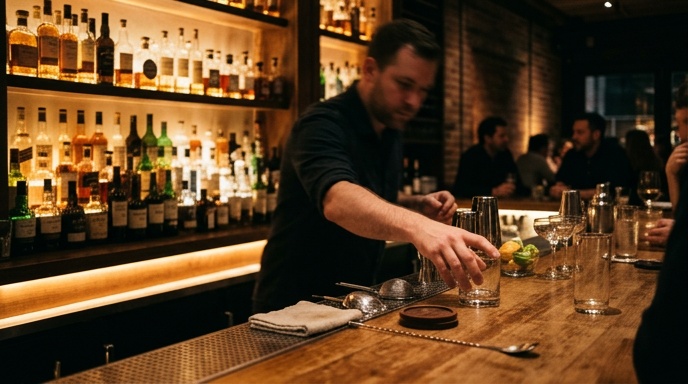
4. Light the Bar as a Destination
A well-lit bar pulls people in and becomes a focal point rather than a side counter. Backlight the bottle shelves to make the display glow, add soft under-counter light for a floating effect, and keep task light on the service area so staff pour accurately. The bar should read as the brightest, most inviting zone when you walk in.
- Backlit shelving to make the spirit range the hero.
- Under-counter LED strip for a warm, floating edge.
- Discreet task lighting on the pour and till areas.
Late bars and hotel lounges lean on this heavily, and it is the sort of ambient and feature lighting our team specifies for hospitality fitouts across the country.
5. Add Facade and Entrance Lighting
Facade lighting makes a venue visible and inviting from the street, which directly affects whether passers-by step in. Wash the front of the building with warm uplighting, light the signage clearly, and keep the entrance bright and welcoming so the threshold feels safe and obvious after dark.
On an Irish high street competing for evening trade, a dark frontage gets walked past. Architectural facade lighting is one of the few lighting investments that works on people before they are even inside, and it doubles as a security benefit.
6. Match Colour Temperature to the Mood
Colour temperature sets the emotional tone of the room before anyone notices the fittings. Warm white between 2200K and 2700K feels cosy and relaxed, ideal for evening dining, while neutral white around 3000K to 3500K suits brighter cafes and daytime trade. Keep it consistent across the floor so the room does not look patchy.
| Setting | Colour Temperature | Feel |
|---|---|---|
| Evening fine dining | 2200K to 2700K | Warm, intimate, relaxed |
| All-day cafe or bistro | 3000K to 3500K | Fresh, bright, alert |
| Kitchen and prep | 4000K and up | Clear, functional, sharp |
Mixing temperatures on the dining floor is a common mistake. One cool fitting among warm ones jumps out and cheapens the whole room.
7. Use Candlelight and Table-Level Warmth
Table-level light adds warmth and intimacy that ceiling fittings alone cannot deliver. Real candles, LED candles or small warm table lamps bring the glow down to eye level, soften faces and make each table feel like its own space. It is a low-cost touch with an outsized effect on how settled diners feel.
LED candles suit venues wary of open flames, and they hold a steady warm colour all night without burning down mid-service.
8. Build Flexible Lighting Scenes
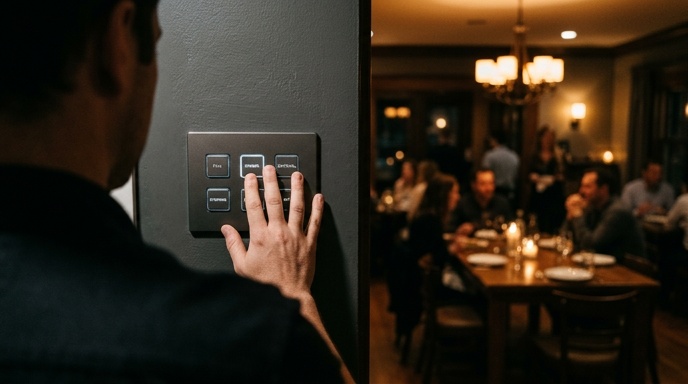
Lighting scenes let staff change the whole room’s mood with one button rather than fiddling with individual dimmers. Programme presets for lunch, dinner, late-night and cleaning, so the transition through the day is instant and consistent regardless of who is on shift.
- Lunch scene bright and even for fast daytime turnover.
- Dinner scene dropped and warm for a relaxed evening.
- Late scene low with accents lifted for atmosphere.
- Clean scene full brightness for close-down.
Scene control removes guesswork and keeps the room looking the same every night. It is part of the control side of a proper lighting design and install rather than something bolted on after.
9. Light the Kitchen and Pass Properly
The kitchen and pass need bright, cool, functional light so staff work safely and plates go out looking right. Use neutral to cool white around 4000K and above for clarity on prep surfaces, and keep the pass well lit so the kitchen can check every plate before it leaves. This is a safety and quality area, not a mood area.
Food styled under warm dining light can look different under cool kitchen light, so chefs rely on consistent, bright task lighting to plate accurately before service.
10. Plan Lighting Around Future Changes
Smart lighting planning builds in flexibility so the system adapts as the venue evolves. Run spare cabling, choose addressable LED fittings, and pick a control system you can expand, so adding a private dining area or reworking the layout later does not mean ripping everything out.
Venues rarely stay still. A room that becomes a function space at weekends needs lighting that can reconfigure, and planning for that at install stage saves real money down the line.
- Leave spare capacity in the control system from day one.
- Choose dimmable, addressable fittings over fixed ones.
- Document the setup so future changes are straightforward.
Thinking ahead matters because the fittings have to keep working for years. For context on long-term energy and lighting efficiency in commercial spaces, the SEAI business energy guidance is a useful reference, and the national standards from NSAI cover the electrical side of any install.
Getting the Lighting Right for Your Venue
Restaurant lighting is less about buying expensive fittings and more about layering warm ambient, task and accent light with good dimming and sensible control. Nail those basics and the room flatters the food, settles the diners and pulls trade off the street.
If you want a lighting scheme designed around your space, service style and future plans, get in touch with our team for a free site visit and honest advice on what you need and what you can skip.