Find out how to choose an AV installation company by checking three things above all else. Look at their years of proven work, whether they handle repairs in-house, and how honest they are about what you actually need. A good installer designs a system that fits your space and budget, then stands behind it long after handover.
Most venues get burned not by bad kit, but by poor advice and slow support when something fails. That’s why the questions you ask upfront matter more than the brochure specs.
This guide walks you through the checks that separate a reliable AV partner from a one-off supplier, so you back the right team before you sign anything.
What Makes a Good AV Installation Company in Ireland?
A good AV installation company in Ireland handles the full job from consultation to long-term support, not just the sale. That means system design suited to your room, professional install, testing before handover, and a clear plan for when something needs fixing. Breadth across audio, video and lighting from one team usually beats stitching several suppliers together.
When you’re comparing companies, weigh these signals:
- A track record you can verify, ideally years of live installs across venues similar to yours.
- Honest advice on what you need and what you can skip, rather than an upsell.
- In-house technical support so faults don’t sit waiting on a third party.
- Real installation photos and named client references, not stock imagery.
Depth matters too. A team that understands room acoustics, pixel pitch and lighting balance together will design one system that works as a whole, which is far harder than fitting parts in isolation.
Why Does In-House Repair Support Matter for AV?
In-house repair support matters because AV downtime costs you money and reputation every hour a screen or sound system is dark. When faults are diagnosed and fixed by technicians who know the kit, you skip the delays of manufacturer returns and third-party queues. For a bar on a Friday night or a scoreboard for GAA club on match day, that difference is decisive.
What Happens When Repairs Are Outsourced?
Outsourced repairs mean your equipment leaves the building, joins a queue, and comes back on someone else’s timeline. You’re often left renting a stopgap or running with a dead display while the fault sits with a supplier who has no stake in your event calendar.
How to Check a Company’s Support Setup
Ask directly how faults are handled and who fixes them. A strong answer names their own workshop and technicians. Worth noting, only one AV company in Ireland runs a fully in-house equipment repair team, which is exactly the kind of structural advantage that keeps uptime high.
- Do they repair on their own premises or send kit away?
- Is there a response guarantee, and 24/7 cover for key accounts?
- Can they monitor installed systems remotely to catch issues early?
Which Questions Should You Ask an AV Company Before Hiring?
Ask questions that reveal how the company works day to day, not just what they sell. The right questions expose gaps in service, support and honesty before you commit. Below are the ones that consistently separate a genuine AV partner from a box-shifter.
| Question | What a strong answer shows |
|---|---|
| How long have you installed systems like mine? | Relevant, verifiable experience in your sector |
| Who repairs faults, and how fast? | In-house team, clear turnaround, no third-party delays |
| Do you offer a free site visit first? | They design around your actual space, not a template |
| What can I skip to stay on budget? | Honest advice over maximum spend |
| What support follows handover? | Ongoing service, monitoring, and future adjustments |
If a company dodges the repair question or pushes kit before seeing your venue, treat that as a warning. The consumer guidance from the CCPC on comparing service providers and getting clear terms applies just as well to AV contracts as to any other big purchase.
How Do You Compare AV Companies on Service Breadth?
Compare AV companies by how much of the job they can deliver under one roof. A team that covers audio, video and lighting, plus both permanent install and short-term hire, gives you one point of contact and one integrated design. Splitting the work across specialists often means finger-pointing when systems don’t talk to each other.
Breadth also unlocks flexibility over a project’s life. You might trial a screen on hire for a big event, then convert to a permanent install once you’ve seen it work in your room.
- Audio matched to room size, capacity and whether it’s for speech, background music or live performance.
- Video and LED walls specified by pixel pitch and viewing distance, indoor or outdoor.
- Lighting from ambient bar and restaurant setups through to architectural and stage effects.
- The option to hire LED screens short-term before committing to a permanent build.
A company that only does corporate video conferencing, for example, is fine for a boardroom but wrong for a nightclub or a stadium. Match the breadth to the venue you’re fitting out.
What Should You Expect From the Installation Process?
Expect a structured process that removes guesswork and gets it right first time. A reliable AV installer follows three clear stages, so you always know where the project stands and what happens next. The best teams involve your staff at handover so the system is understood, not just handed over.
Discovery, Design and Delivery Explained
The process runs in three stages that build on each other. Discovery sets the scope, design shapes the solution, and delivery puts it in and proves it works.
- Discovery covers a site visit to understand your goals, layout, audience flow and timelines.
- Design produces an integrated solution where audio, video and lighting work as one, with room for future expansion.
- Delivery means on-site install, configuration and testing before a proper handover.
What Good Aftercare Looks Like
Good aftercare means ongoing support, future adjustments and fast fault resolution, not silence once the invoice clears. Ask what’s included after handover and whether remote monitoring is offered so problems get caught before they cost you an event.
Should You Buy or Hire Your AV Equipment?
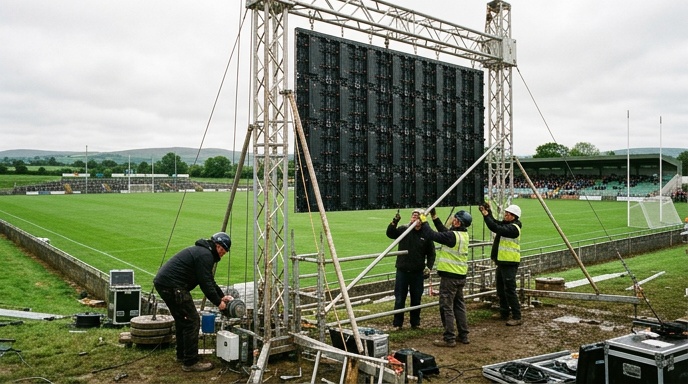
Buy when you need the system permanently and want control, hire when the need is short-term or you want to trial kit before committing. A permanent install suits a venue using AV daily, while hire suits festivals, conferences, one-off activations and match days. Many venues do both across the year.
Weigh it against how often you’ll actually use the equipment:
- Choose to buy for daily-use venues, permanent scoreboards, and fixed digital signage networks.
- Choose to hire for seasonal events, promotions, exhibitions and testing a setup first.
- Consider leasing or rent-to-buy where the budget suits a spread cost over time.
Sports clubs weighing a permanent board can also look at LED scoreboard installation options, some of which can be part-funded through advertising revenue. That model turns a cost centre into a partial earner over the board’s life.
Choosing the Right AV Partner With Confidence
The right AV installation company in Ireland proves its worth through track record, in-house support and honest advice, not the size of its brochure. Check who fixes faults, whether they visit your site first, and how much they can deliver from one team. Those answers tell you more than any spec sheet.
If you’re planning a fitout, an event screen or a scoreboard and want straight advice on what you need, talk to the team about your project and get a clear plan before you spend a cent.