Most LED screens last between 80,000 and 100,000 hours of use before brightness drops to around half of what it started at. For a display running typical venue hours, that works out at roughly 7 to 10 years of real service. The screen doesn’t suddenly die at that mark. It simply fades gradually, and the point where brightness halves is the industry benchmark most manufacturers quote.
That figure moves a lot depending on how hard you run the panels, where they sit, and how well they’re looked after. An outdoor screen baking in the sun at full brightness all day wears faster than an indoor wall running at half power in a cool function room.
This guide breaks down the real lifespan of an LED screen, what shortens it, and how to squeeze more years out of a display whether you own one or hire one in.
How Long Does an LED Screen Last in Years?
A well-built LED screen lasts around 7 to 10 years in normal use, based on the 80,000 to 100,000 hour rating manufacturers publish. The hour rating measures how long until the panel reaches 50% of its original brightness, not total failure. A screen can keep working well past that point, just dimmer than when it was new.
The years you actually get depend on how many hours a day the screen runs. Here’s how the same panel plays out across different settings.
| Usage setting | Hours per day | Approx years to 50% brightness |
|---|---|---|
| Boardroom or classroom | 6 to 8 hours | 30+ years |
| Bar or hotel lobby | 12 hours | 18 to 22 years |
| Retail signage | 16 hours | 13 to 17 years |
| 24/7 outdoor display | 24 hours | 9 to 11 years |
So a screen in a quiet corporate setting can outlast the building’s décor twice over, while a hard-worked outdoor wall reaches its benchmark far sooner. The hours matter more than the calendar.
What Affects How Long an LED Screen Lasts?
LED screen lifespan comes down to five main things: how bright you run it, the heat it deals with, the quality of the components, where it’s installed, and how well it’s maintained. Get these right and a screen comfortably hits the top of its rated life. Get them wrong and it fades years early.
- Brightness level. Running at full brightness all the time ages the diodes faster. A screen set to 70% draws less current and runs cooler, which extends its life.
- Heat. Heat is the biggest enemy of any LED. Poor ventilation or direct sun with no cooling shortens the lifespan noticeably.
- Component quality. Better diodes, drivers and power supplies simply last longer. Cheap panels cut corners that show up after a few years.
- Environment. Dust, damp, salt air near the coast, and temperature swings all take a toll, especially outdoors.
- Maintenance. Regular cleaning, calibration and quick repair of small faults stop minor issues turning into dead modules.
Of these, heat and brightness do the most damage over time, and they’re the two you have most control over day to day.
Does Indoor or Outdoor Use Change the Lifespan?
Outdoor screens generally wear faster than indoor ones because they run brighter and face harsher conditions. An outdoor panel pushes high brightness to beat daylight, and it battles rain, UV, dust and temperature swings. A good outdoor product like a weather-rated P5 panel is built for this, but it still ages quicker than an indoor wall sitting in a stable, cool room.
How Does Pixel Pitch Relate to Lifespan?
Pixel pitch affects image quality and viewing distance, not lifespan directly, but finer-pitch indoor screens often last longer in practice. A fine 2.6mm indoor wall usually lives in a controlled environment and runs at lower brightness, so it ages slowly. A coarse outdoor pitch runs hot and bright, so it reaches its benchmark sooner despite the panel itself being rugged.
What Happens When an LED Screen Reaches End of Life?
An LED screen doesn’t switch off at end of life. It fades slowly to around half its original brightness, and individual diodes or modules may start to fail here and there. The picture looks dimmer, colour accuracy drifts, and the odd dark pixel or patch appears. At that stage the screen still works, but it no longer looks its best in a competitive setting.
The common signs a screen is nearing the end of its useful life include:
- Noticeably dimmer output that struggles against ambient light.
- Colour shifts or patchy brightness across the wall.
- Dead pixels or whole modules going dark.
- Flickering or inconsistent sections.
- Rising repair frequency on older panels.
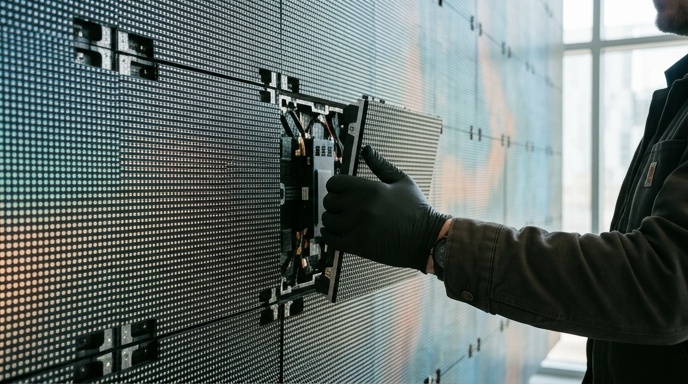
Because LED walls are modular, a single failed module can often be swapped rather than replacing the whole screen. The only AV company in Ireland with a fully in-house repair team can diagnose and fix faults directly, which keeps a fading wall running longer and avoids slow manufacturer returns. That difference matters most for a bar or retailer where a dark screen means lost impact.
How to Make an LED Screen Last Longer
You extend an LED screen’s life mainly by managing heat and brightness and keeping up with simple maintenance. None of it is complicated, and the payback is years of extra service. Here are the practical steps that make the biggest difference.
- Drop the brightness. Run at the lowest level that still looks good for the space. Many screens are left far brighter than they need to be.
- Use auto-brightness. Let the screen dim in darker conditions. This saves power and reduces diode wear, especially outdoors and overnight.
- Keep it cool. Ensure clear airflow around the panels and check that fans and vents aren’t clogged with dust.
- Clean regularly. Dust traps heat and dulls the surface. A gentle clean keeps panels running cooler and looking sharper.
- Calibrate and update. Regular calibration keeps colour even across modules, and processor firmware updates keep control hardware stable.
- Fix small faults fast. A single flickering module left alone can stress neighbouring panels. Early repair prevents bigger failures.
Good control hardware helps too. Quality processing, such as the Novastar LED control systems used across professional installs, manages brightness and signal cleanly, which keeps panels working within their comfortable range.
If you’d rather not own and maintain a wall at all, short-term LED screen hire hands the upkeep to the supplier and always gives you current kit.
Is It Worth Repairing or Replacing an Older LED Screen?
Repairing is usually worth it when a screen is still bright overall and only a few modules have failed, because LED walls are modular and faulty sections can be swapped cheaply. Replacement makes more sense once brightness has dropped across the whole wall, colour is uneven everywhere, or repair costs start stacking up on an ageing panel.
A quick way to decide is to weigh a few factors against each other.
- Age and hours run. A screen well past its rated hours is a candidate for replacement, not ongoing repair.
- Fault spread. A few isolated dead modules point to repair. Patchy dimming across the whole wall points to replacement.
- Parts availability. Older panels can be hard to match. If spare modules are scarce, repair gets harder.
- How visible the screen is. A flagship wall in a busy venue justifies earlier replacement. A back-of-house display can run on longer.
An honest assessment from an installer who can actually fix the kit, rather than one who only sells new panels, tends to save money. In many cases a targeted repair buys several more good years. For independent guidance on getting fair value and avoiding pressure to over-spend, the consumer rights guidance from the CCPC is a useful reference before committing to a big replacement.
LED Screens vs Other Display Types on Lifespan
LED video walls generally last longer than LCD or projection displays, which is a big reason they dominate large commercial installs. LCD panels and projector lamps or lasers tend to fade or fail sooner, and projection in particular loses brightness as the light source ages. For a side-by-side view, here’s how the common display types compare on expected working life.
| Display type | Typical rated life | Main lifespan limit |
|---|---|---|
| LED video wall | 80,000 to 100,000 hours | Diode brightness fade |
| LCD display | 30,000 to 50,000 hours | Backlight ageing |
| Laser projector | 20,000 to 30,000 hours | Light source fade |
| Lamp projector | 2,000 to 5,000 hours per lamp | Lamp burnout |
LED also wins on serviceability. A failed module can be replaced without scrapping the whole display, something you can’t do with a sealed LCD or a projector. That modular design is a real part of why a professionally maintained LED wall keeps earning its keep for a decade or more. For general technical standards on display equipment and installation quality in Ireland, the standards published by the NSAI are worth a look.
Getting the Most From Your Display
An LED screen is a long-term investment, and with sensible brightness settings, decent cooling and regular upkeep, most comfortably reach the 7 to 10 year mark or well beyond. The real difference between a wall that fades early and one that lasts comes down to maintenance and having someone who can fix faults fast when they appear.
If you’re weighing up a new install, planning a repair, or deciding whether to buy or hire, talk to a team that handles the full lifecycle in-house. Get in touch for honest advice on the right display for your venue and how to keep it running for years.