Planning any kind of event in Ireland brings the same early question. Do you need full event production services, or is straightforward AV hire enough to get the job done? The honest answer depends on the scale of the event, the venue, the audience size, and how much technical help you actually want on the day.
Below, we’ve broken down the real differences, when to choose each option, and the questions to ask before you commit to either route.
What Does AV Hire Actually Cover?
AV hire is essentially equipment rental. You get the kit delivered, and depending on the package, you get it set up, tested, and collected afterwards. It’s a clean, transactional service that works well when your event needs are clear-cut.
Typical AV hire includes the following.
- LED screens or projectors for slides, video content, or sponsor loops
- Speakers, microphones, and small mixing desks
- Basic stage lighting or uplighters for ambience
- Cables, stands, and the infrastructure to make it all work
- Delivery, install, and derig if you opt for the full service
Dry hire, where the kit is dropped off and you handle the rest, is usually the cheapest route. It suits AGMs, small conferences, training days, and internal corporate meetings where a member of staff can manage the tech.
For most outdoor or public-facing events, though, dry hire is a false economy once something goes wrong mid-event.
What’s Included in Event Production Services?
Event production is a managed service. Instead of hiring gear, you’re hiring a team who plan, design, install, operate, and troubleshoot the whole technical side of your event. That includes the equipment, but the value sits in the expertise around it.
A typical production package covers design and delivery across three connected disciplines.
Audio, Video and Lighting Working Together
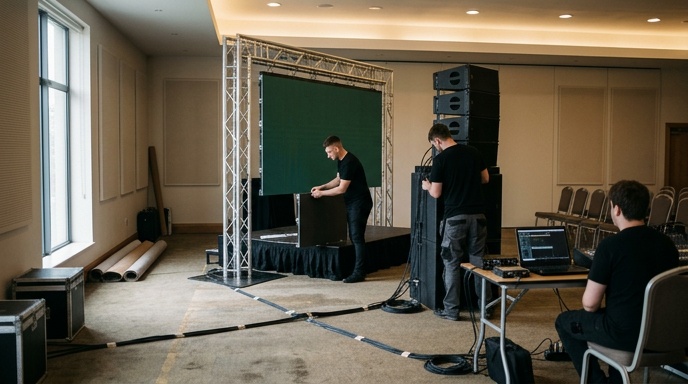
Rather than treating sound, screens, and lighting as three separate hires, production teams design them as one system. Cues are timed together, screen content is mapped properly to the venue, and the audio system installation is tuned to the actual room rather than dumped in as generic PA.
On-Site Technical Crew
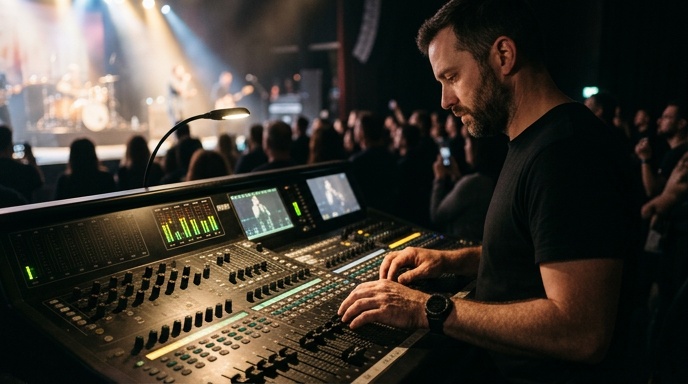
You get engineers on the desk during the event. If a microphone drops out, a laptop stops feeding the screen, or a speaker needs a comfort monitor, someone is there to fix it in seconds rather than minutes.
Pre-Event Planning and Site Visits
Production companies visit the venue in advance, check power, rigging points, sight lines, and load-in access. That planning is what stops the usual event-day surprises around cable runs, weight limits, or blocked fire exits.
How to Choose Between Event Production Services or AV Hire
The clearest way to decide is to look at your event honestly and answer a few practical questions. If you’re leaning towards “we’ll figure it out on the day”, that’s usually a sign you need production rather than hire.
Ask yourself these 5 questions.
- How many people are attending, and does the audio need to carry across a large space?
- Are there live speakers, panels, or performers, or is it mostly pre-recorded content?
- Is the event being filmed, streamed, or recorded for later use?
- Do you have a venue with existing AV, or are you building everything from scratch?
- What’s the cost of something going wrong in front of the audience?
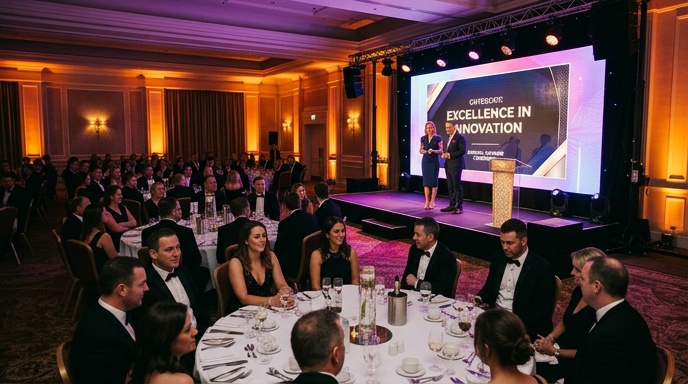
For a room of 50 people watching a slide deck, standard AV hire is grand. For a product launch with 300 guests, professional event production is required with live camera feeds to LED screens, and branded lighting. This way, you get a whole a production team who own the outcome from start to finish.
Where Does the Budget Really Go?
Budget is usually the deciding factor, so it’s worth being straight about where the money actually sits. AV hire has a lower headline price because you’re paying for equipment and short install time. Production costs more because you’re paying for design work, crew hours, and on-site operation.
That said, production often saves money in the wider event budget. Fewer surprises, better use of the venue, and a smoother run mean less wasted spend on things that don’t land.
If your event has sponsors, VIPs, or media attention attached, the risk of a technical failure is usually worth more than the cost of doing it properly.
For public-funded events, you can check what other organisations spend through guidance on the Irish government’s procurement resources before setting your own figures. It gives a useful reality check on realistic production budgets.
Common Scenarios and What Usually Suits Them Best
To make the decision easier, here are the most common event types we see in Ireland and the setup that typically fits.
Corporate Conferences and AGMs
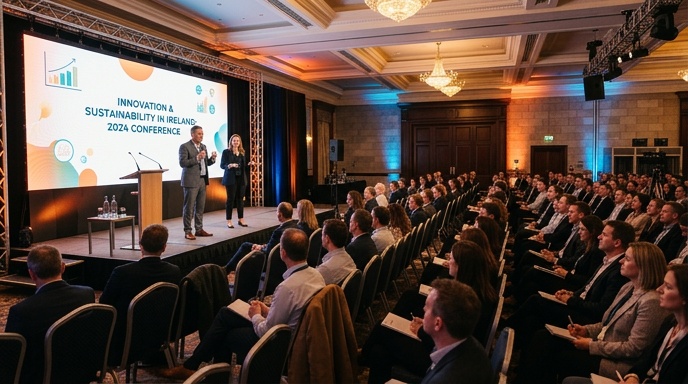
Anything over 100 attendees with live speakers usually needs full production. Below that, a good AV hire package with delivery and install will handle it, provided someone on your team is comfortable running the desk.
Sports Events and Match Days
Scoreboards, perimeter LED, and pitchside displays sit firmly in production territory. Timing, remote control, and integration with the broadcast feed all need proper engineering. For one-off tournaments, scoreboard and LED screen hire with an install-and-derig service is the usual route.
Weddings, Parties and Private Events
Most private events are fine with AV hire. A screen, some uplighting, and a solid speaker setup delivered and collected covers what most hosts actually need on the day.
Product Launches and Brand Activations
These almost always need production. The audience is there specifically to be impressed, so screen content, lighting, and audio have to land together at the right moments. Cutting corners here shows immediately.
Festivals and Outdoor Events
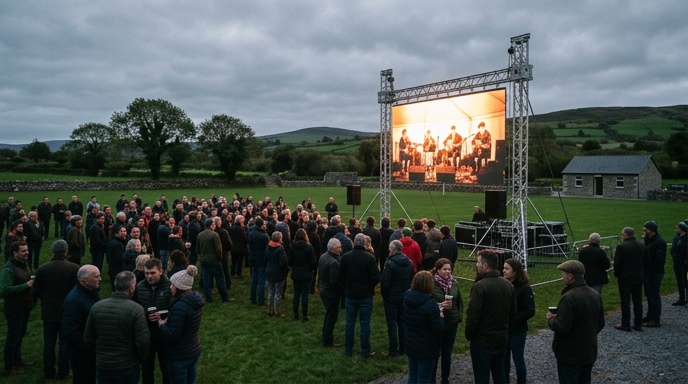
Outdoor work needs weather-rated equipment, power planning, and rigging. That’s production every time, no matter the size.
Questions to Ask Before You Book Either Option
Whether you’re leaning towards hire or full production, the same set of questions will save you a lot of stress once you’ve picked a supplier.
- Will you visit the venue before the event, and is that visit included in the quote?
- Who is responsible if a piece of kit fails during the event?
- Is technical crew included on the day, or is that an add-on?
- What happens with delivery, install, derig, and collection times?
- Is the equipment tested and maintained in-house, or sourced from a third party?
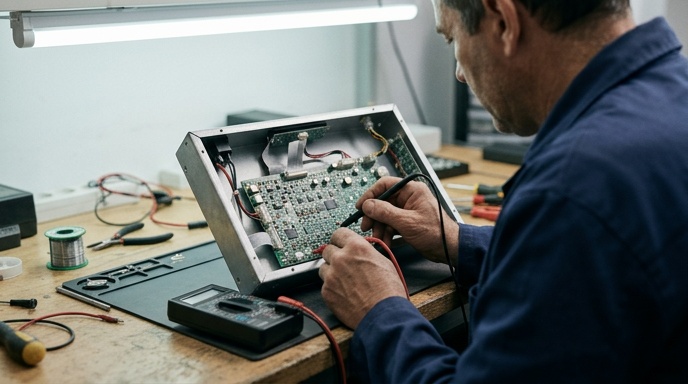
That last one matters more than most people realise. Suppliers who repair and maintain their own kit tend to have far fewer failures on site, because faults are caught before the equipment ever leaves the warehouse.
Making the Right Call for Your Event
If your event is small, self-contained, and you have a confident hand on the tech, AV hire will do the job at a sensible price. Once the audience grows, the content gets more complex, or the stakes rise, event production is worth every euro because you’re buying certainty rather than equipment.
Not sure which side of the line your event falls on? Get in touch with AVL for a straight answer. Our team stays available to guide you on what you actually need and what you can skip.